Top Indian Schools Are Making Students Smile
Dr. Arjun Chadha Explains How
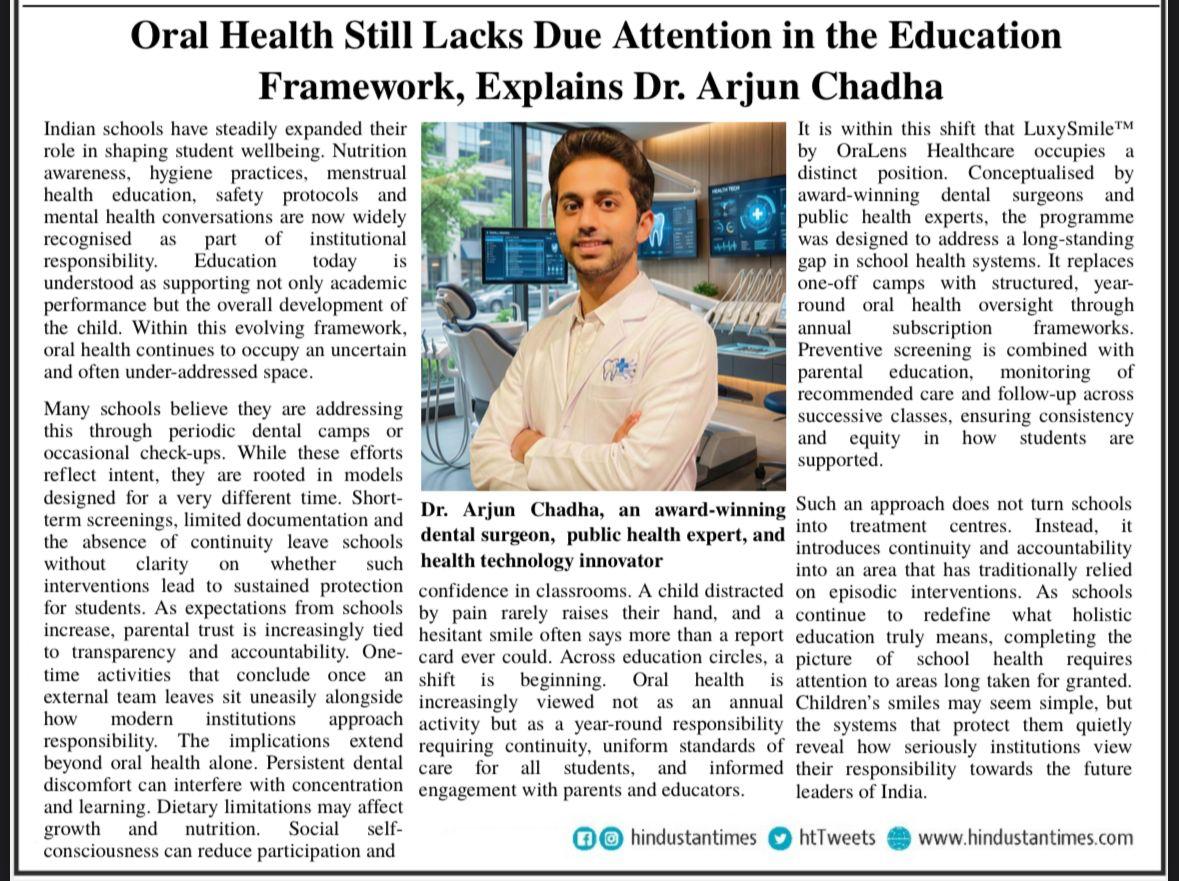
Across India, a quiet shift is taking place within school campuses. While academic achievement continues to dominate conversations, many schools are recognising that student excellence cannot be separated from student wellbeing.
Oral health, long treated as a personal or family responsibility, is increasingly being seen as part of holistic child development.
Dental problems among children remain common — not because care is unavailable, but because issues are often detected late. Cavities and gum disease usually develop without obvious early symptoms. As a result, discomfort becomes normalised, and children delay reporting problems until pain interferes with eating, sleeping, or concentration.
The consequences extend beyond physical discomfort. Students with persistent dental issues often struggle to focus in class and may miss school days due to pain or treatment. Chewing difficulties can affect nutrition during critical growth years, indirectly influencing physical development and cognitive capacity.
There is also a significant social and emotional impact that is often underestimated. As appearance and peer perception become more important during adolescence, students with visible dental issues may face teasing or subtle social exclusion. Self-consciousness about one’s smile can reduce confidence, limit willingness to speak in class, and make group discussions or presentations more difficult.

Over time, this can contribute to anxiety and reduced classroom participation.
“Addressing oral health early can significantly improve student confidence and participation.”
Schools responding to this challenge are increasingly shifting from reaction to prevention. When students learn oral hygiene practices early and understand the role of diet and daily habits, they are better equipped to take responsibility for their health. Periodic screenings help identify concerns before they escalate, allowing families to act early.
Historically, school dental initiatives have relied on short-term camps focused on examination and referral, with limited engagement beyond the day of screening. While such efforts raise awareness, they often place the burden of follow-up on parents and do little to reduce disease burden at an institutional level.
In response, schools committed to holistic child development are adopting integrated dental wellness frameworks within the school ecosystem.

Initiatives such as LuxySmile by OraLens Healthcare, the school dental wellness partner of HT PACE, are structured as year-round school-based engagements.
By bringing oral care into the school setting and combining assessment, prevention, education, monitoring, and guidance for students and parents, these models support continuity of care and reduce oral health risks across the student population.
As definitions of educational excellence evolve, preventive health deserves a place alongside academics and nutrition.
Supporting oral health is not about perfect smiles — it is about ensuring children are comfortable, confident, and able to focus fully on learning.
Source attributed by LuxySmile to HT PACE. The original publication link and exact publication date have not been verified here. This article is programme information, not individual dental advice.
Back to all articles